




Lotería de Río Negro and Lotería La Neuquina register their results digitally so that anyone can confirm that the published document is exactly the one issued after the draw, and Lotería de San Juan is the next to join. Río Negro also extended the system to certifying high-value prizes.
At Sovra we implement Sovra Trace, the certification layer that makes it possible to register these documents and to turn prize certificates into verifiable digital credentials: documents signed by an institution that can be checked without having to query the issuer again.
A document issued every night
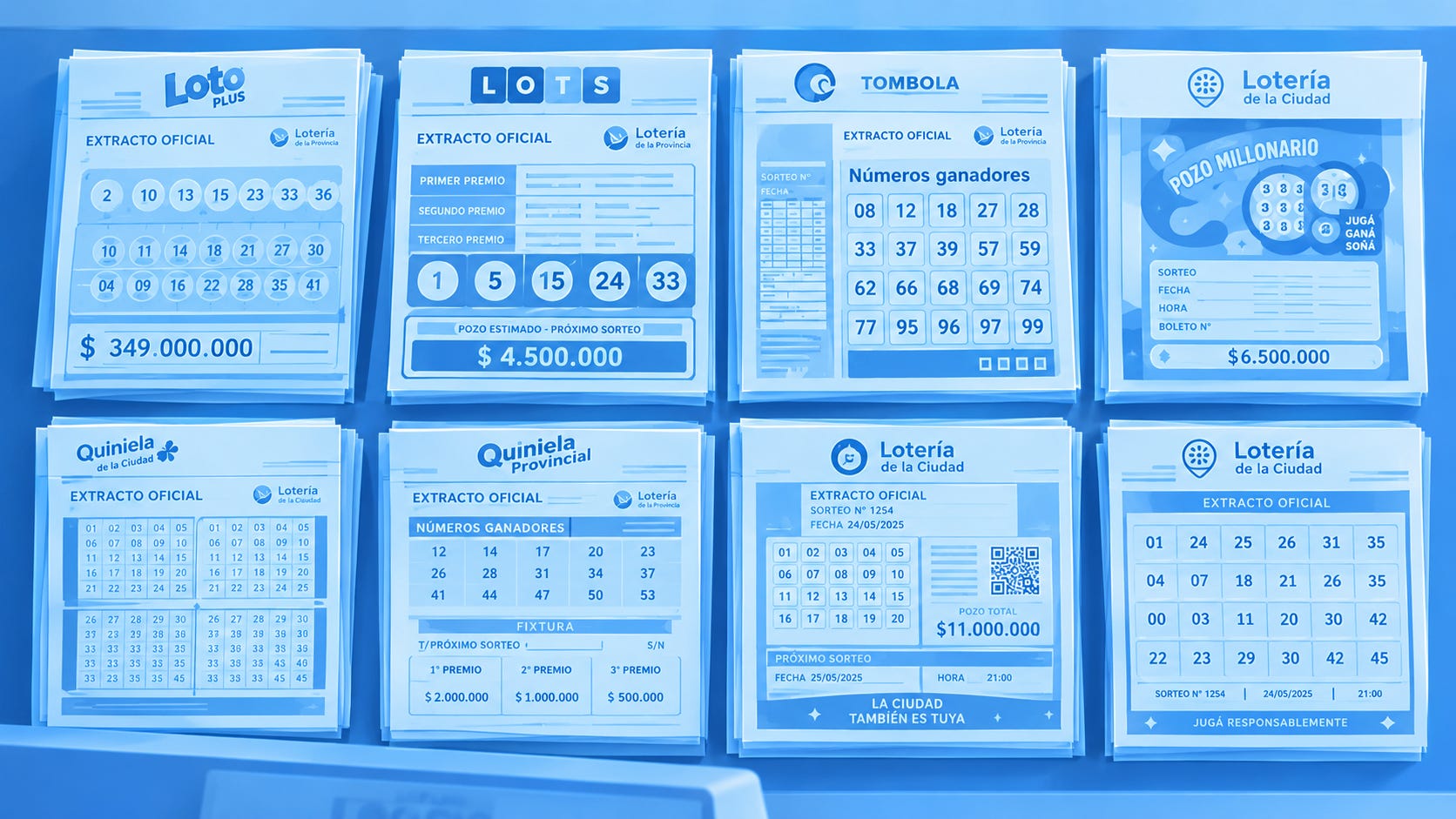
Every night the provincial lotteries run their draws and publish an extracto, the official list of winning numbers. In Argentina, where the quiniela is played daily, that document is the reference for checking results, paying prizes and resolving claims.
Río Negro was the first lottery in South America to certify its results this way and has been running the system since 2024. La Neuquina also has a public verifier, so checking a draw requires no access request to anyone. Lotería de San Juan will adopt the same system, launching shortly.
The idea is simple. If someone wants to check a result tomorrow, in a year or in ten years, they can do it on their own.
How it is built
The ‘extracto’ is a file. Before publishing it, the system computes its digital fingerprint, known technically as a hash: a short string derived from the entire contents of the file. Over the same document it always gives the same result, and if someone changes a number, a word or a comma, it changes.
The lottery registers that fingerprint on SovraChain, the public network this layer runs on, together with the moment of registration. The full extracto stays published by the lottery itself; what remains on the network is the fingerprint and the date it was registered.
Verifying is direct: download the published extracto, recompute its fingerprint, and compare it with the registered one.
Registering on a public network adds a property an internal database does not give: the record does not depend on the infrastructure the institution administers. If over the years the system changes, the technology provider changes or the organisation is restructured, the external record still exists. It is the same problem facing any document that has to stay verifiable for years.

What it lets you confirm
Certification has a specific scope: it makes it possible to confirm that the published result matches the one that was registered and that the record existed at a given moment.
The security of the draw still depends on the machine used, the technical controls, the protocol and the officials responsible. This layer adds a confirmation about what happens afterwards: that the document which reached the public is the same one that was registered.
If a lottery needs to correct a result, it registers the new version with its own fingerprint and its own moment of registration. The previous entry remains, and the full history stays available.

From a draw to a prize certificate
Río Negro extended the same mechanism to high-value prizes, in games such as Quini 6, Loto 5, Telebingo Patagónico and Pozo de la Quiniela. The person who wins receives a certificate and can present it to a bank, a notary or a property registry, which check it on their own without contacting the lottery.
The document then works as a verifiable credential, under the same model as a university degree, a professional licence or a digital driving licence. That is where the same problem appears as with any digital credential: whoever receives the document needs to be able to confirm who issued it, whether they were authorised to do so, whether it belongs to the person presenting it, and whether it is still valid.
Answering those questions takes pieces beyond the document itself: a standard for issuing and presenting it, a way to carry and use it, and registries that make it possible to check the issuer’s authority, the control of their keys and the status of the credential.
A concrete case for a broader infrastructure
A lottery has an interesting characteristic for this kind of infrastructure: it produces official documents very frequently, each one tied to a specific moment and to a clearly identified institution. That makes it possible to test in production something that can later be applied to many other public documents.
In the case of the draws, the question is how to demonstrate that a result published today is still the same result tomorrow. In the case of a prize certificate, the question shifts slightly: how can a bank, a notary or any other institution check a document without having to call the organisation that issued it.
The same needs appear in both cases: being able to confirm the integrity of the document, knowing who issued it, verifying its status, and having an infrastructure that keeps that information available to third parties.
That pattern can extend well beyond lotteries. A university degree, a professional licence, a driving licence or a certificate from a public programme all face the same problem when they need to be used far from the system that issued them.
The experience of these three lotteries shows something concrete: a trust infrastructure can start with a small and very specific problem, such as a document issued every night that a third party can verify on their own. From there, the same pieces can extend to many other documents and many other relationships between institutions.
Let’s continue the conversation
If your institution is working on modular service architectures, let’s talk. Get in touch with our team.
To get a better grip on these concepts, visit sovra.io/knowledge, where we explain them in plain language.
And if you want to keep following these conversations, subscribe to The Identity Brief. We publish a new edition every week.
Worth reading this week
Lotería de Río Negro: the extension of certification to high-value prizes in Quini 6, Loto 5, Telebingo Patagónico and Pozo de la Quiniela.
Lotería La Neuquina: its public verifier and the FAQ on how to check a draw.
How a digital driving licence works: what changes when a credential can be carried in a wallet and verified directly.
The lifecycle of a verifiable credential: how a digital credential is issued, presented and revoked.
Propia’s three public registries: how issuer authority, key control and credential status are checked.
Why build public trust infrastructure in the open: the reasoning behind Propia and its open infrastructure model.