



Governments across Latin America have been digitizing for years. More platforms, more portals, more apps. But digitalization and infrastructure are not the same thing. You can digitize every government service and still leave citizens carrying paper documents because no one built the shared layer that makes credentials portable, verifiable, and reusable across institutions.
Digital Public Infrastructure is not a new technology. It is a different way of thinking about what governments build and who can build on top of it. Think traffic lights: a common protocol that everyone understands, where the rules are shared and the system works because all actors — public, private, civil society — operate on the same standard.
In this episode of Sovra Podcast, Lucas Jolias speaks with Aura Cifuentes, Director for Latin America and the Caribbean at Co-Develop, the philanthropic fund accelerating DPI adoption across the Global South. Aura brings a rare perspective: eight years inside Latin American governments (including leading Colombia’s Digital Government Directorate), followed by a move to the ecosystem side, where she now funds and supports the very projects she once championed from within.
What You Will Hear
DPI is a mindset change, not a technology label: Aura frames Digital Public Infrastructure as three words that each carry weight. Infrastructure means shared layers that others can build on — not siloed platforms. Public means what generates public value, not necessarily what the public sector builds alone. Digital means data-driven, reusable, and open. The shift is from governments building closed systems to governments building common protocols — like traffic lights — that the entire ecosystem uses. For a deeper dive on DPI as a concept, see the DPI section of Sovra’s Knowledge Base.
Co-Develop’s catalytic model: Co-Develop is a philanthropic fund that helps governments lay the first brick. Their role is catalytic: fund a pilot, prove it works, and let the government scale it with local partners. The portfolio is intentionally diverse — private sector, civil society, academia, researchers — because DPI should be safe, inclusive, and multi-stakeholder by design. If a project only survives on philanthropy, it was never infrastructure. This aligns with the Digital Public Goods approach — open-source, openly licensed tools designed to be adopted and adapted across countries.
PIX as the DPI case study: Brazil’s payment interoperability system is one of the clearest examples of DPI done right. It does not matter what digital wallet you use, what bank you have, or whether you are a fintech. Scan a QR code and pay. PIX works because it is a shared infrastructure with a governance forum (PIX Forum) that includes diverse voices — government, private sector, civil society — to discuss fraud prevention, innovation, and improvements. The same model applied to digital identity would mean verifying once and using that identity everywhere, across institutions and borders. This is the Reusable Identity approach that Sovra has been building toward — and the reason interoperability standards like OpenID4VC and DIDComm matter.
Latin America’s genuine opening: Aura sees a region at a critical moment. Governments are genuinely willing to adopt DPI — not because donors told them to, but because the legacy of digital government has matured enough to recognize what works and what needs to be rebuilt. The private sector is organized and proactive, offering expertise and proven solutions. Civil society has moved from open data advocacy to actively shaping DPI governance. And multi-stakeholder coordination is happening organically, as in Colombia, where the Bank of the Republic is already talking to the private sector about shared infrastructure without external pressure.
The adoption gap no one is closing: This is the hard truth in the conversation. Countries have rolled out digital IDs. They have the technology. But in 2026, Aura still travels to countries where everything is physical. Citizens present paper documents because the institutional validators — public and private — do not accept Verifiable Credentials in a fluid, organic way. The gap is not technological. It is about real-world use cases that make citizens’ lives measurably better. Without that, digital identity becomes a “very nice tool in the lab” that does not change anything in practice. This is the same adoption challenge that the NLínea deployment in Nuevo León addressed by digitizing 120+ services with measurable impact: 80% faster, 30% less bureaucracy.
“We push the solution without thinking about the problem”: One of the sharpest observations in the episode. Governments have invested heavily in digital identity issuance. But the question of whether citizens actually benefit — whether adoption is real, whether the use cases solve friction — often comes second. Aura argues for reversing the sequence: start with the citizen problem, then build the infrastructure that solves it. This echoes the principle behind Sovra’s approach: lead with citizen benefit, not technology.
Surviving political transitions: DPI projects take time. They are ambitious, sometimes expensive, and they need to survive changes in government. Uruguay is the regional example of state policies that persist across administrations — a case explored in depth in Ep. 5 with Juan Pablo Garcia. Aura sees more governments recognizing that if the country is a democracy, the infrastructure must outlast any single government. The challenge is turning government projects into state infrastructure — and that requires the multi-stakeholder governance that makes DPI resilient to political cycles.
Unlearning is harder than learning: Co-Develop’s work involves not just teaching governments new approaches but helping them unlearn old ones. The shift to open technology, open standards, and ecosystem coordination requires stepping back from how digitalization has been done for the past decade — a progression mapped in the Evolution of Digital Identity section of the Knowledge Base, from centralized to federated to user-centric to self-sovereign. Open source brings biases and preconceptions that need to be addressed. The process is iterative, co-creative, and uncomfortable — but Aura sees it as the only path to infrastructure that lasts.
Key Quotes
“DPI is a change of mentality. It is an approach to a different kind of digitalization. When we talk about government, it means building layers that the private sector can build on.”
“We push the solution without thinking about the problem. We are in 2026 and I still travel to countries where everything is physical.”
“If projects only survive on philanthropy, they were never infrastructure. The government has to lead, or we start badly.”
About the guest
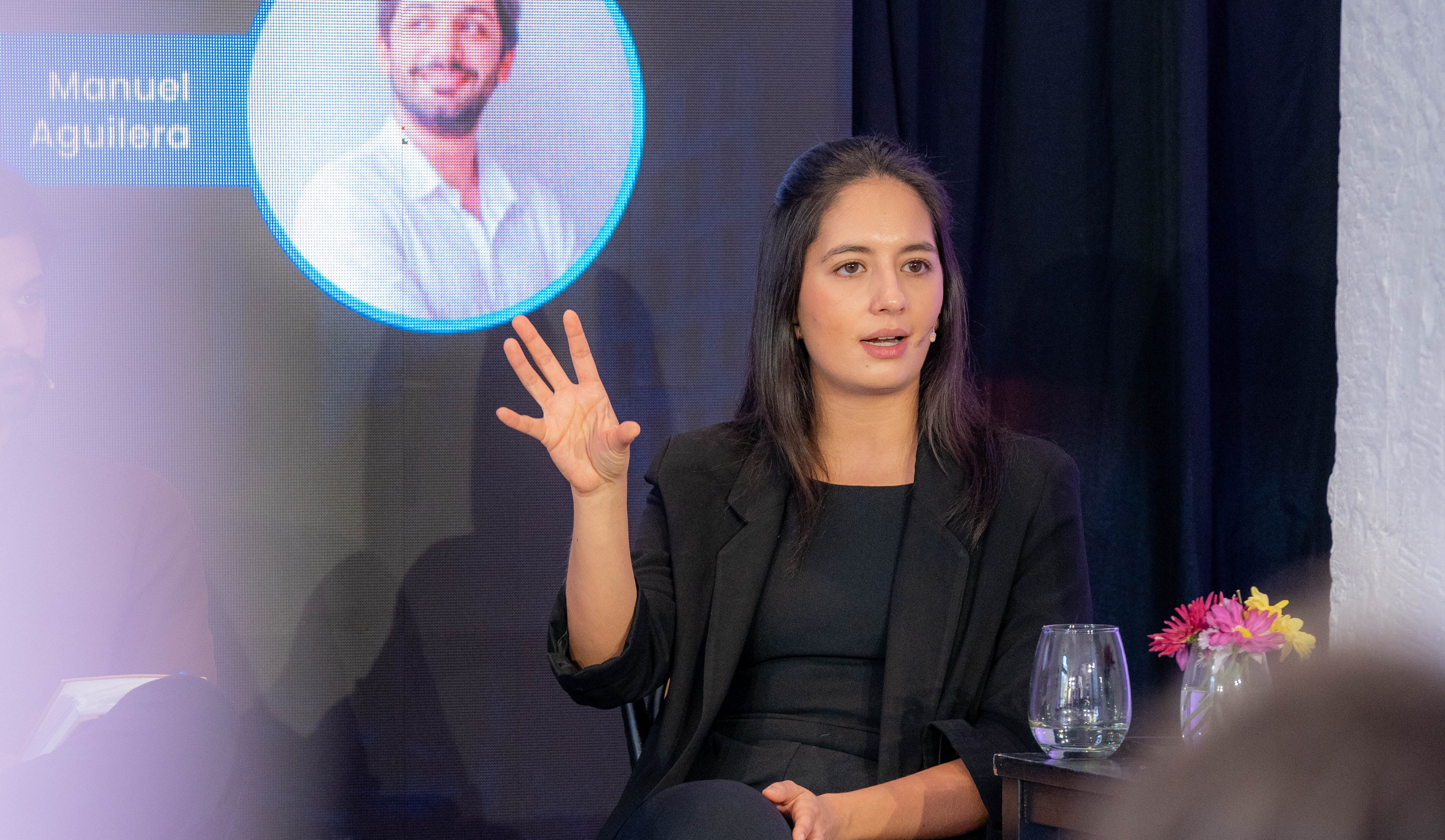
Aura Cifuentes is Director for Latin America and the Caribbean at Co-Develop, the philanthropic fund accelerating Digital Public Infrastructure adoption worldwide. Before joining Co-Develop, she spent eight years in Colombia's public sector, where she served as Director of Digital Government at the Ministry of Technologies, designed the country's first public innovation policy at the National Planning Department, and led transparency initiatives from the Presidential Office. She holds an MPA from Columbia University and Sciences Po, and a degree in Government and International Relations from Universidad Externado de Colombia. Her work sits at the intersection of government modernization, open data, and the multi-stakeholder governance models that make DPI sustainable.
🎧 Listen to the full episode on YouTube
📚 Explore the concepts: Digital Public Infrastructure | Digital Public Goods | Reusable Identity | Verifiable Credentials | Evolution of Digital Identity | Real-World Use Cases
🌐 Follow Sovra: LinkedIn | X | YouTube
✉️ Subscribe: sovra.substack.com
🔗 Learn more: sovra.io
More from Sovra
Podcast episodes:
Ep. 5: Digital Identity From Uruguay to the World (with Juan Pablo Garcia)
Ep. 4: From 9 Hours to One Click — How Salta Built Reusable Digital Identity (with Martin Guemes)
Reports & articles:
What is a DID? The Building Block of Portable Digital Identity
Three Things That Stand Out When You Rank LATAM’s Identity Systems
Case studies:
The Identity Brief is Sovra’s weekly newsletter on digital identity, verifiable credentials, and trust infrastructure. Subscribe to receive it every Thursday.