



Governments are solving the wrong identity problem. We invest in digitizing documents — signed PDFs, chipped IDs, repeated biometrics — but the architecture stays the same: centralized databases where all our personal information sits concentrated, tempting for attackers and opaque to citizens.
In this episode of Sovra Podcast, Lucas Jolías speaks with Pedro Alessandri, Undersecretary of Smart City at the Government of the City of Buenos Aires and one of the key drivers behind QuarkID, the first government-scale decentralized identity protocol implemented in Latin America. Pedro explains why the city decided to build its own Self-Sovereign Identity infrastructure, how they made it open source, and why that decision was key to regional adoption.
What you will hear
The real problem: Why digitizing documents doesn’t solve digital identity. Signed PDFs aren’t interoperable, centralized databases are vulnerable, and the Cambridge Analytica case proved nothing had changed in how our personal data is managed — the same tension between convenience and privacy that we analyzed in Privacy Is Not a Trade-Off.
What is QuarkID: A decentralized, self-sovereign digital trust protocol based on W3C standards for decentralized identity. Buenos Aires built it as an open-source project to enable adoption across the public and private sectors throughout the region — the same Digital Public Infrastructure approach that Daniel Abadie described in Ep. 1 as the engine of digital trust in Latin America.
The cost of repetition: Buenos Aires has 3 million residents, but 3.5 million more commute daily from the province. Those people connect with three different biometric systems — city government, provincial government, national government — and if they have more than one bank, they may go through five different verifications. A waste for citizens and institutions alike. The answer is what Sovra calls Reusable Identity: verify once, use everywhere.
Open source as strategy: Pedro explains that the decision to make QuarkID open source wasn’t just about transparency — it was because decentralized identity only works with mass adoption. If the city solved the problem behind closed doors, it was an internal advantage; but the real value lies in interoperability with the private sector and other jurisdictions.
Advice for governments: Start with non-critical use cases to mature the product — if you begin with birth certificates at the civil registry and something breaks, the headache is enormous. Build a technology architecture flexible enough to withstand protocol changes. And prioritize based on which use case drives the most adoption.
The best entry points: Decentralized single sign-on and access control. Pedro notes that no state — large or small, global power or small municipality — has fully solved single sign-on. Implementing it in a decentralized way with verifiable credentials is cheaper and more efficient than existing systems. For access control, they’re about to release an open-source product: a QR scan replaces expensive and hard-to-maintain biometric devices — exactly the Digital Wallet paradigm we explored in Connect Your Wallet.
The future: EU–Ethereum convergence: Pedro looks at the convergence between the European Union and the Ethereum Foundation. Both entities have adopted W3C standards for verifiable credentials — they agree on the credential format, though they differ on the communication protocol. That convergence revalidates the direction Buenos Aires took years ago, and the ambition now is to interoperate beyond the region.
Key quotes
💬 “The architecture that puts a lot of information in one place is very tempting to attack.”
💬 “The protocol that wins is the one that achieves the most consensus and the most interoperability.”
💬 “Not every state has solved the challenge of a single sign-on. Implementing it in a decentralized way is a great, positive use case.”
About the guest
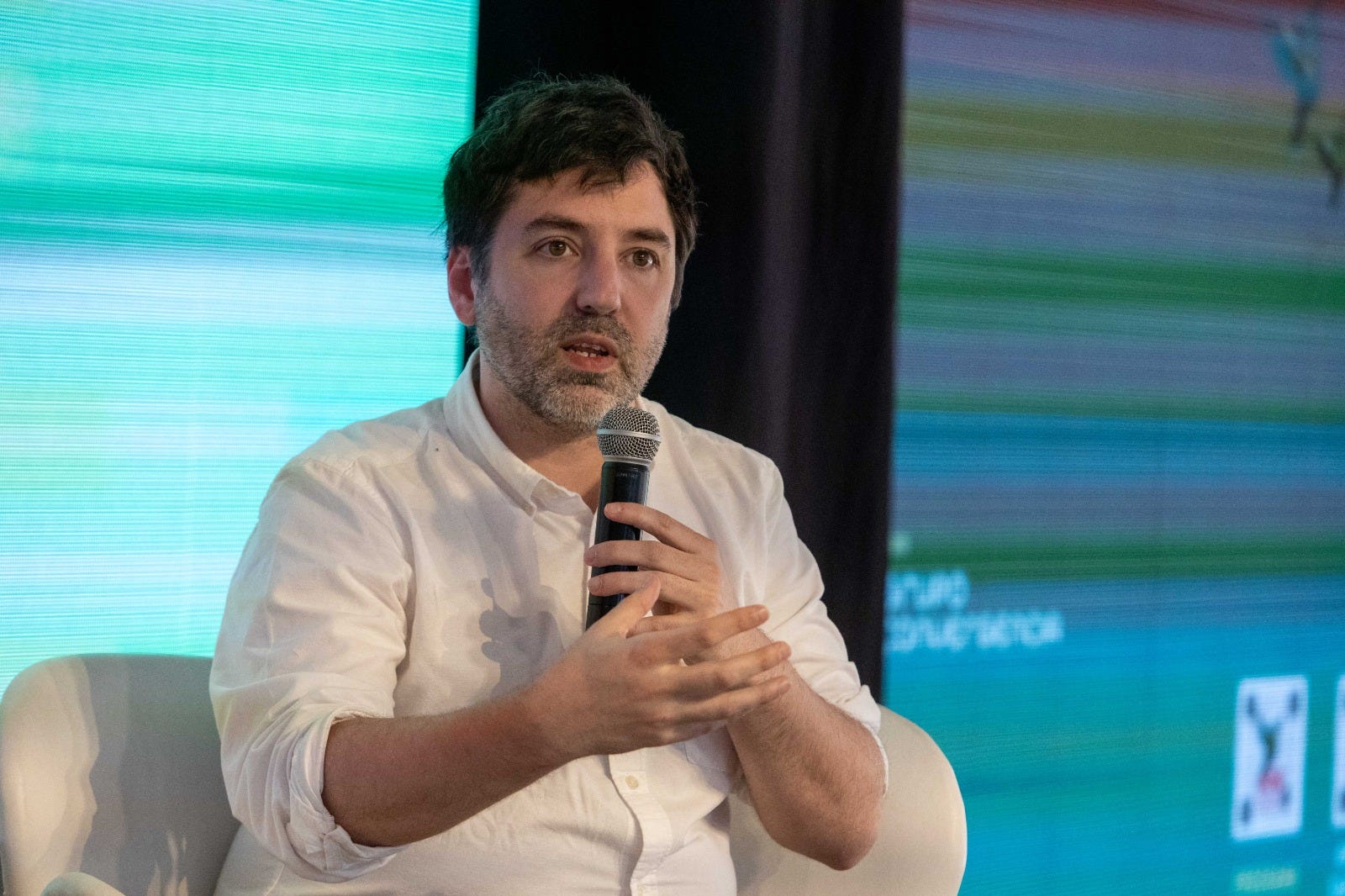
Pedro Alessandri is the Undersecretary of Smart City at the Government of the City of Buenos Aires. Under his leadership, the city implemented QuarkID — the first government-scale decentralized identity protocol in Latin America — integrated into the miBA platform serving over 3.6 million citizens. QuarkID was built as an open-source project based on W3C standards, using zkSync and zero-knowledge proofs on Ethereum, and today enables the adoption of self-sovereign identity across the region.
🎧 Listen to the full episode on YouTube
📚 Explore the concepts: Sovra Knowledge Base
🌐 Follow Sovra: LinkedIn · X · YouTube
📩 Subscribe: sovra.substack.com
🔗 Learn more: sovra.io
More from Sovra
Podcast episodes: Ep. 1: Building Digital Trust in Latin America (with Daniel Abadi, CDPI) · Ep. 2: Mexico’s Path to Digital Public Infrastructure (with Mariela Saldivar Villalobos) · Ep. 3: Evolution of Digital Government and Identity in Latin America (with Luis Papagni) · Ep. 4: From 9 Hours to One Click — How Salta Built Reusable Digital Identity (with Martín Güemes) · Ep. 5: One Credential, Every Border — How Uruguay Is Building Latin America’s Digital Identity Infrastructure (with Juan Pablo García)
Reports & articles: Connect Your Wallet: Towards a Citizen-Centric Digital Identity · Digital Identity in Latin America · Governments are solving the wrong identity problem · Privacy Is Not a Trade-Off
Case studies: IDDI Salta · NLínea: Nuevo León · Mi Luján Digital