


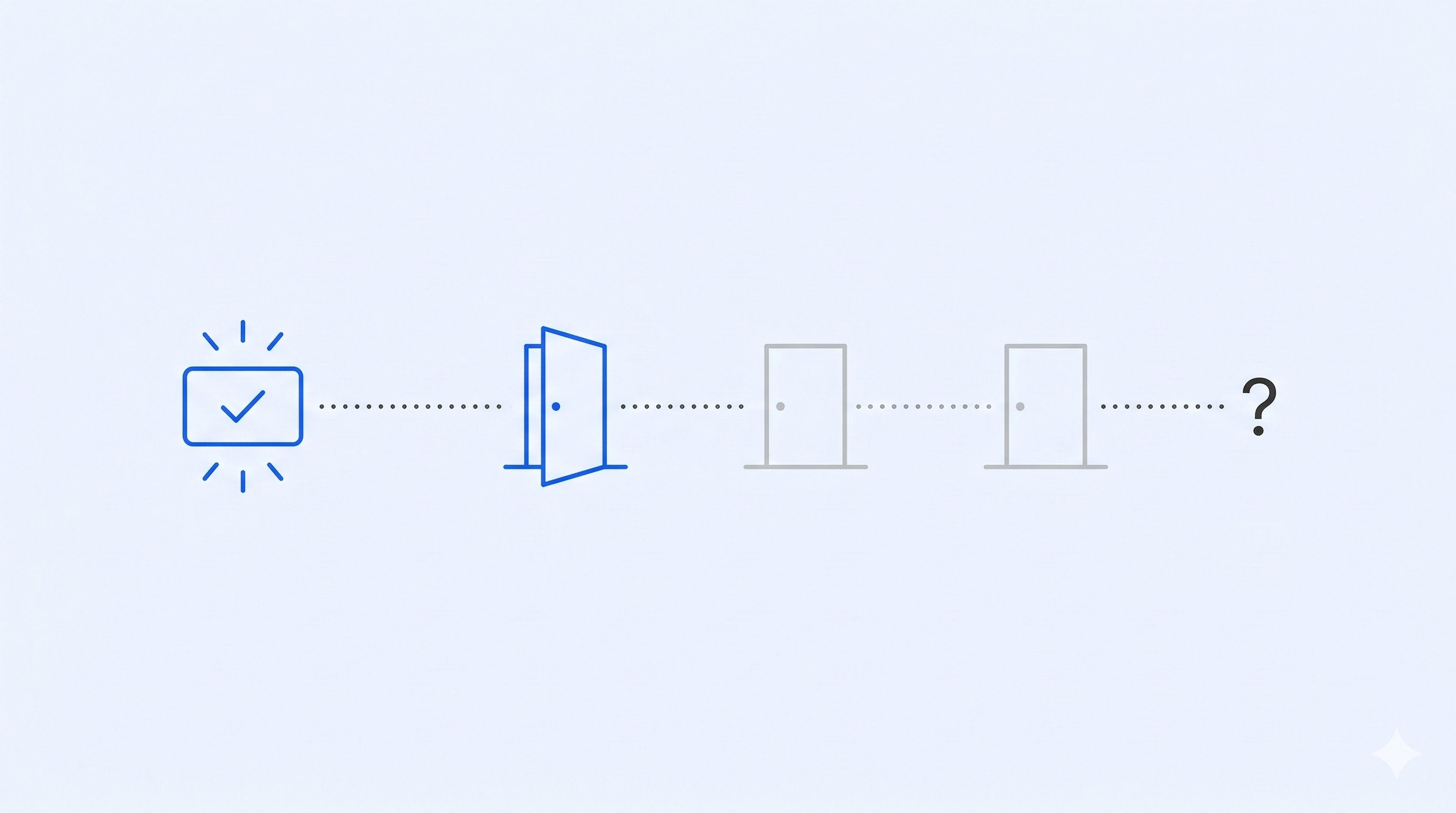
There’s a scene that plays out across Latin America more often than most people realize. A citizen walks into a government office, completes a verification process, and walks out with a digital credential stored in a wallet on their phone. A verifiable credential — cryptographically signed, anchored to open standards, and designed to travel.
And then they try to use it somewhere else. The bank asks for a PDF scan. The employer wants a notarized copy. The next province over has never heard of the system.
The credential is technically valid. But nobody on the other end knows how to check it.
Why Verifiers Don’t Plug In
The conversation around digital identity tends to focus on issuance — how credentials get created, signed, and delivered to a citizen’s wallet. That side of the equation has matured significantly. The harder question is what happens on the other side: the bank, the hospital, the school, the employer who receives that credential and needs to decide whether to trust it.
Today, most verifiers don’t accept digital credentials. And the reasons are more structural than ideological.
There’s no shared infrastructure to connect to. When a hospital wants to verify a credential, it can’t just “check it” the way it would run a credit check. There’s no common verification layer that all institutions connect to. Each verifier would need to build its own integration — understand the credential format, validate the cryptographic signatures, resolve the issuer’s decentralized identifier, and confirm that the credential hasn’t been revoked. That’s a significant technical lift for a hospital IT department that just wants to confirm a patient’s identity.
Verification requires trusting the issuer. Even if a verifier can technically read a credential, it needs to trust the institution that issued it. In a fragmented system, that trust has to be established bilaterally — one verifier, one issuer at a time. A bank in one province has no reason to recognize a credential issued by a government office in another province unless both are anchored to the same trust layer.
There’s no incentive without critical mass. A verifier won’t invest in accepting credentials unless enough citizens carry them. Citizens won’t use credentials unless enough places accept them. This is the classic chicken-and-egg of any new infrastructure — and without a coordinating layer, each institution waits for someone else to go first.
The result: a credential system where one side works and the other side doesn’t exist yet.
What a Shared Verification Layer Actually Changes
When a common trust infrastructure is in place, the mechanics of verification change entirely.
Instead of each verifier building its own integration, the verification layer provides APIs and SDKs that any institution can connect to. A bank doesn’t need to understand DIDs, parse BBS+ signatures, or build a revocation-checking system. It calls an API, receives a yes-or-no answer, and the cryptographic proof happens underneath.
Instead of bilateral trust agreements, all issuers and verifiers are anchored to the same chain. A credential issued in Salta is verifiable in Nuevo León — not because the two governments signed a partnership, but because both connect to the same trust anchor.
And instead of the chicken-and-egg problem, the infrastructure inverts the dynamic: the verification layer is already in place before verifiers decide to connect. Each new institution that plugs in doesn’t build something from scratch — it joins a network. And each new verifier immediately increases the value of every credential already in circulation.
What This Looks Like When It Works
In Nuevo León, Mexico, over 300 government services now accept verifiable credentials. A citizen verified once can access all of them — service completion times dropped by up to 80%. The credential didn’t change between service one and service three hundred. What scaled was the verification side.
In Salta, Argentina, where some communities sit nine hours from the nearest government office, citizens present credentials from their phone to access provincial services remotely. Over 500,000 credentials issued — and the number that matters is that they’re actually accepted at every endpoint.
The pattern across these deployments is consistent: the operational bottleneck was never issuance capacity. It was verification reach.
How Sovra Builds for Both Sides
This is the design principle behind the Sovra stack. Rather than building issuance tools and hoping verifiers eventually show up, the architecture treats the full credential lifecycle — issuance, storage, presentation, verification — as a single connected system.
SovraGov handles issuance: governments digitize services and issue signed credentials. SovraWallet handles storage: citizens hold credentials with selective disclosure, choosing what to reveal without exposing underlying data. SovraID handles verification: a set of APIs that lets any institution accept credentials with minimal integration. And SovraChain anchors trust: an Ethereum-based rollup where issuers and verifiers share a common cryptographic foundation — with no personal data on-chain.
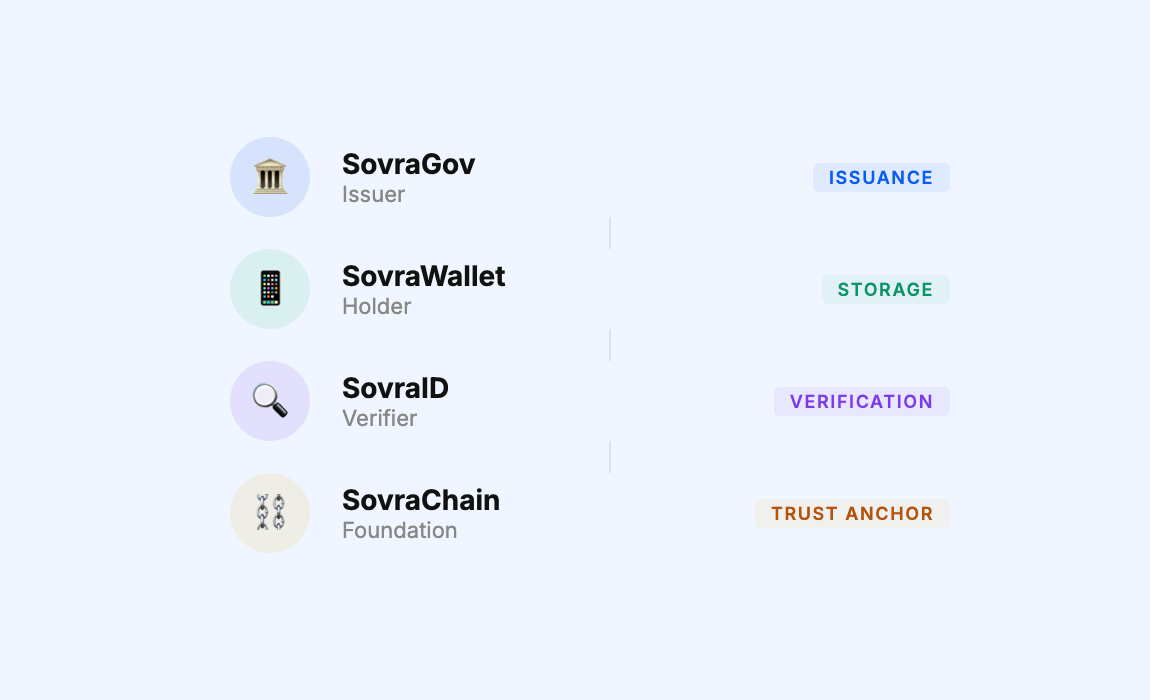
The key architectural decision is that when a government issues a credential through SovraGov, the verification layer through SovraID and SovraChain is already live. A new hospital, school, or employer doesn’t need to negotiate, build, or wait. The infrastructure is already there. They plug in, and every credential already issued becomes usable at their door.
This is how Nuevo León went from a handful of digital services to over 300 — not by issuing more credentials, but by making it trivial for new verifiers to join.
The question emerging from these early deployments is whether this pattern — building issuance and verification as one integrated infrastructure — can become the default approach for governments designing identity programs. The early evidence suggests that when the full lifecycle is treated as a single design problem, adoption compounds in ways that fragmented approaches struggle to match.
Quick Reads This Week
🎙️ Podcast Ep. 5: Digital Identity From Uruguay to the World (with Juan Pablo García) — How Uruguay’s identity broker became the blueprint for cross-border digital identification across 13 nations
📄 Sovra Knowledge Base: The Trust Triangle & Verifiable Credentials — How the credential lifecycle works from issuance through verification
🔗 Interactive Demo: The Full Credential Lifecycle — Issuance, storage, and verification in 5 minutes