



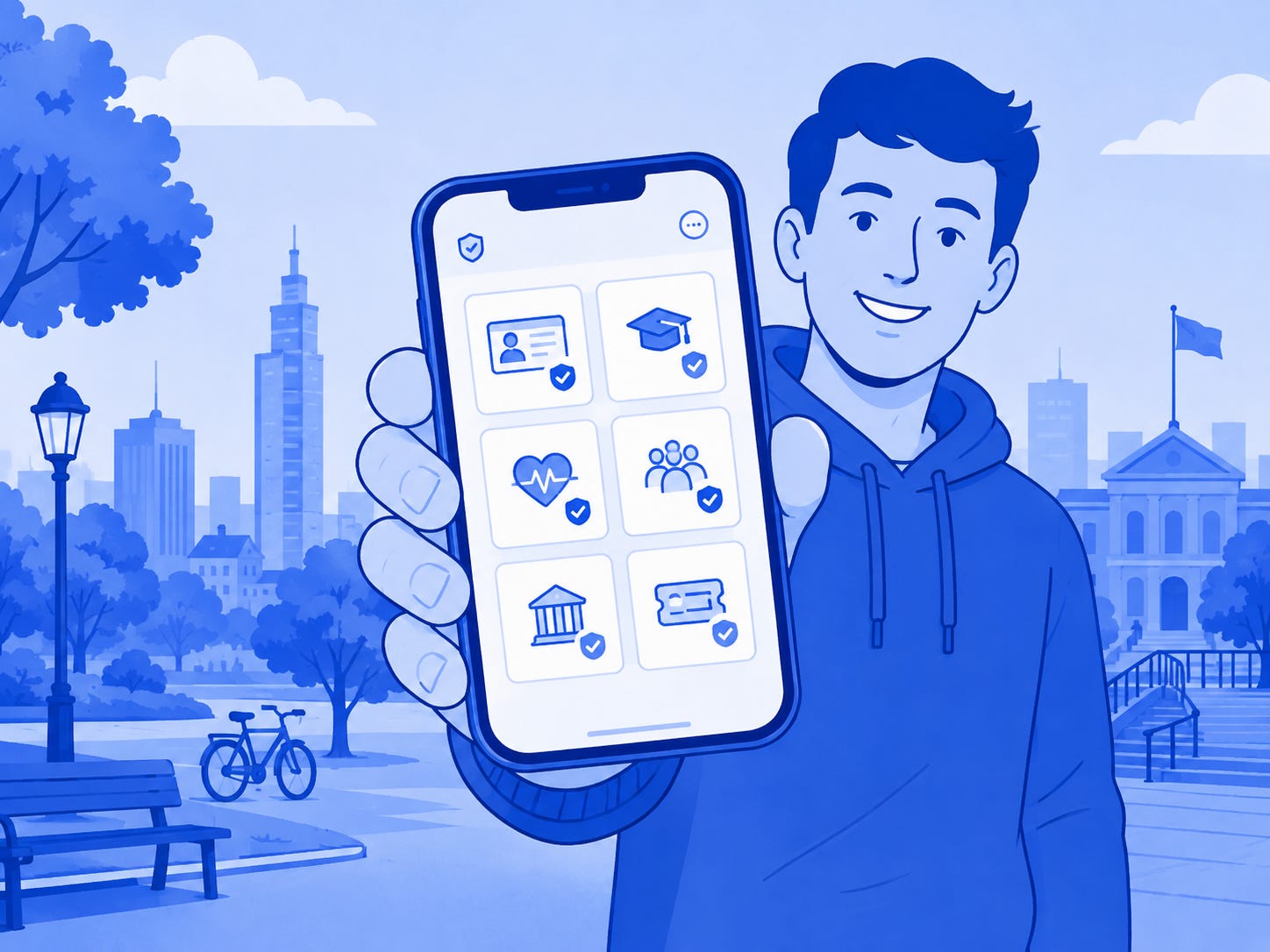
Bogotá has started building its SuperApp, a single platform from which residents will reach the district’s procedures, services and benefits.
Sovra runs the identity layer: the citizen wallet, the issuance of verifiable digital credentials, digital documents signed by an institution that can be checked without calling whoever issued them (how a credential is issued, presented and revoked end to end), and the open protocol that holds them up.
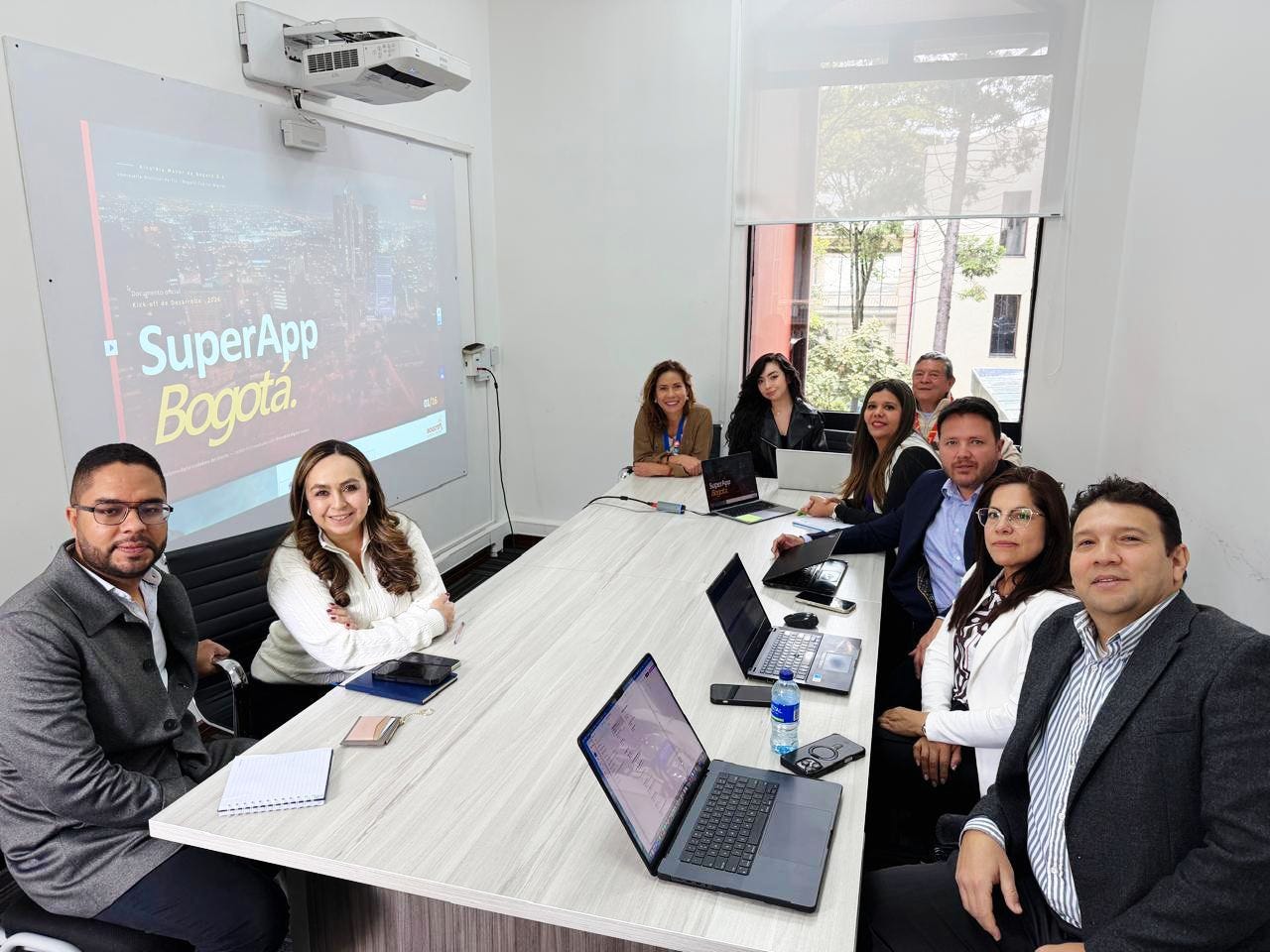
A common platform for a diverse district
Bogotá has 62 district entities and more than 1,400 procedures. Integrating that diversity calls for an architecture that can take on new services without each one having to solve the same technical problems all over again.
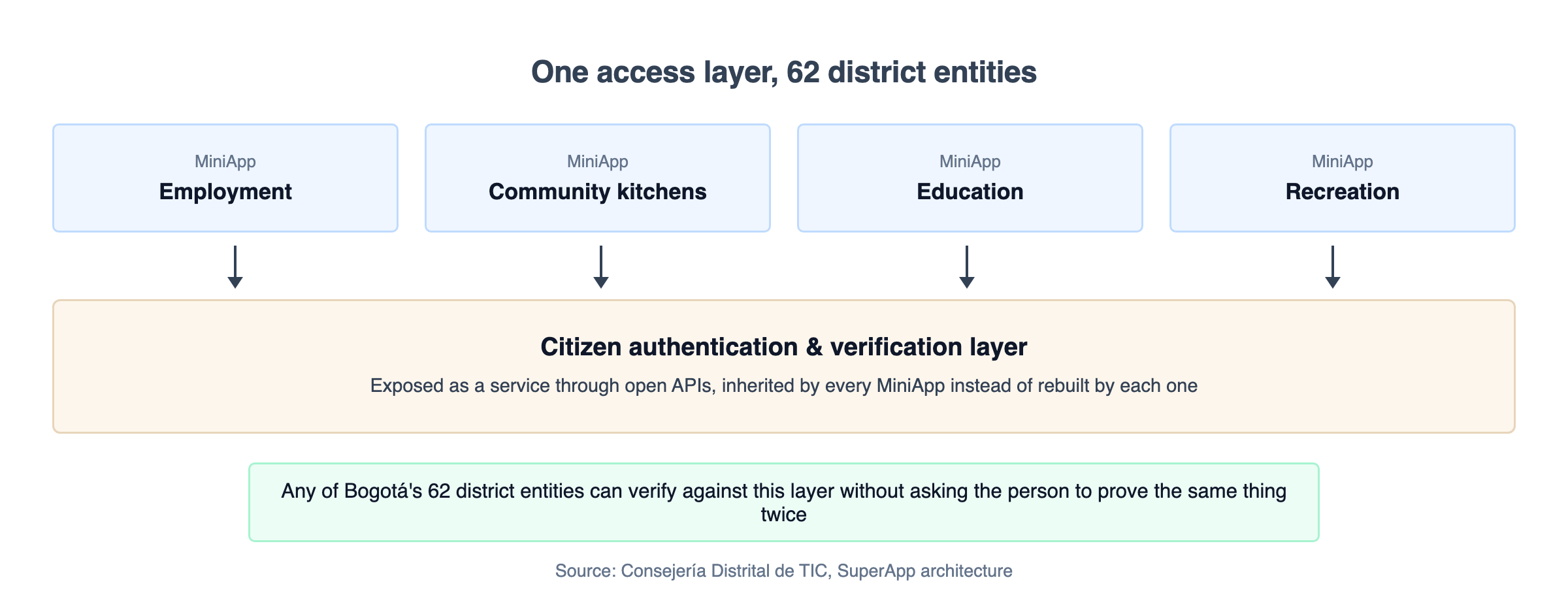
That’s why the SuperApp is designed as a modular platform. Each service can run as a MiniApp, a module that plugs into the ecosystem through standardized APIs and SDKs and inherits shared capabilities for authentication, security, analytics and user experience.
That design lets the platform evolve step by step. The first version doesn’t need to hold every district procedure to start generating value: it can ship specific capabilities, put them into operation, and add new services as the ecosystem grows.
The architecture also includes a service orchestrator, responsible for coordinating flows between the platform’s modules, the digital wallet, and each entity’s systems. Integration becomes a shared capability instead of a series of one-off connections.
How it’s built
The SuperApp runs on open standards that let different institutions issue, share and verify digital credentials securely. Sovra integrates that infrastructure so identity can be used across services, without depending on a single platform or a one-off integration.
The project is also framed by district regulation on interoperability and digital authentication, which lets entities connect under shared rules and lets the solution grow with new services and use cases.
The person’s control over their data is a set of concrete system functions: voluntary presentation, explicit consent with traceability of use and access, revocation under each issuer’s rules, and event logging and audit. The platform also embeds Chatico, the district’s virtual assistant, meets WCAG 2.1 AA accessibility or above, and includes biometric validation with liveness detection plus in-person authentication for vulnerable populations, the same design goal behind the mobile driver’s licence’s offline, cached-verification pattern: digital identity can become public infrastructure that works for more people, regardless of the device they have or their connectivity.
Verifiable credentials for reaching opportunities
The first operational module will focus on economic inclusion. Through verifiable credentials, institutions will be able to issue trustworthy digital information that people keep in their wallet and present whenever they need to access a program, service or opportunity.
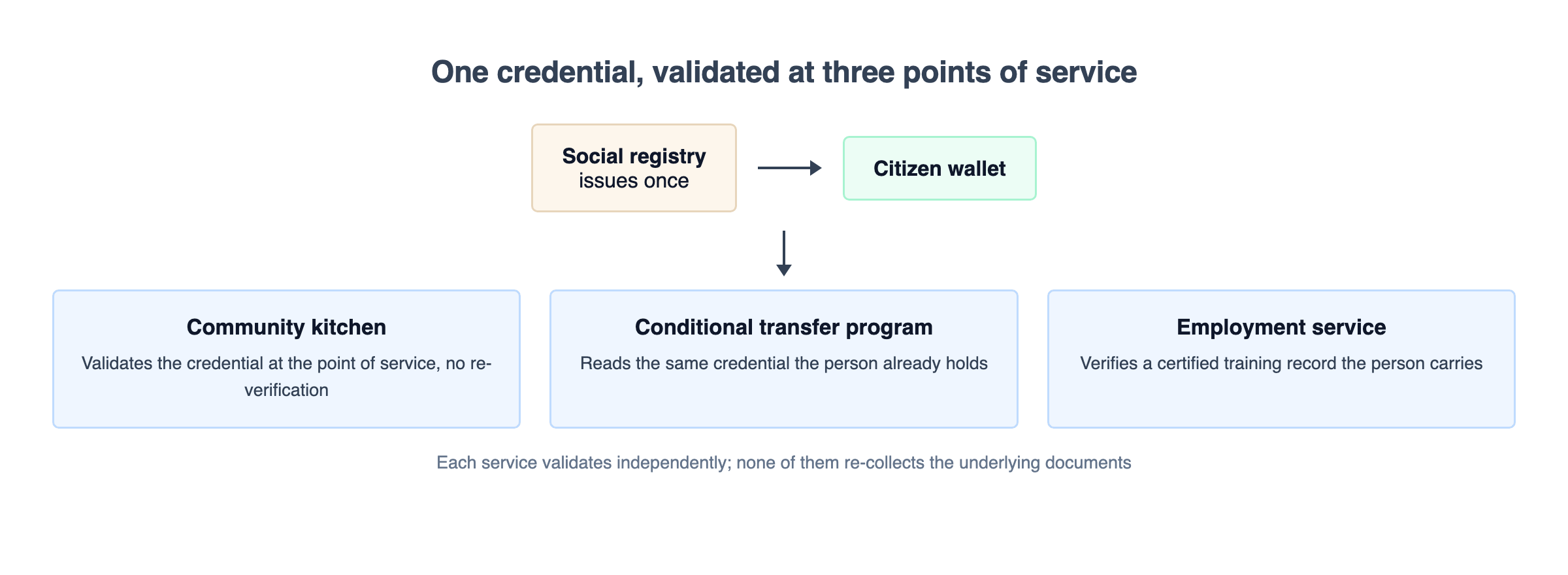
This model cuts down on repeated procedures, makes it easier to validate information, and gives people more control over their data.
Infrastructure built to grow
The solution is built on open self-sovereign identity and verifiable-credential standards, with APIs, privacy by design, and the capacity to add new issuers, verifiers and use cases. It also allows for, at a future stage, credential portability between Bogotá and Cali.
It’s the same kind of architectural bet that, each in its own way, Estonia, India and Denmark have made: how to get a person’s identity to work across institutions, not only inside one.
With Sovra, Bogotá’s SuperApp gets a trust infrastructure that connects institutions, services and citizens, making a digital experience possible that’s simpler, more interoperable, and centered on people.
Continue the conversation
If your institution is working on modular service architectures or verifiable credentials for social programs, let’s talk. Get in touch with our team.
To explore these concepts in simple language, visit sovra.io/knowledge.
And if you want to follow the conversation, subscribe to The Identity Brief. A new edition every week.
Worth reading this week
Introducing Propia: why we build shared verification infrastructure instead of one-off integrations.
sovra.io/case-studies: the other governments already running this identity stack in production.
The Latin America Identity Index: where the region’s digital identity programs stand today.
Bogotá’s SuperApp accelerates with CAF’s backing: the district’s own account of the program.
Verifiable credentials, explained: the Centre for Digital Public Infrastructure’s technical primer on how these credentials work.